The useful part first
Key takeaways
- Sewer rodding is used when a blockage is likely in the main line, not a single fixture trap.
- If wastewater is backing up, stop running water so you do not worsen the overflow.
- A sewer rodding visit usually starts with your symptoms, then moves to access, clearing, and a check of how the line responds.
- If the clog comes back soon after clearing, a camera inspection can help show what rodding could not reveal.
Homeowners usually call for sewer rodding after a backup, repeated slow drains, or a toilet that acts differently than the rest of the house. The useful first step is to match what you saw with the kind of line that may be involved, then decide whether the problem looks isolated or shared.
Rodding is meant to clear a blockage in the main sewer line, not to fix every drainage complaint in the house. If wastewater is backing up, pause water use and do not run fixtures to recreate the problem.
In Vernon Hills, Lake County lists the area within its South Central sanitary sewer system service area. That helps with public-service questions, but it does not tell you what is happening in the private building drain on your property.
If you want to move from symptom to action, you can book through sewer rodding for the service itself, or use how referrals work if you want to understand how the request reaches an independent contractor.
What homeowners usually notice first
The symptom matters because it points to where the blockage may be. A slow kitchen sink by itself often stays local to that fixture. A toilet that rises, a floor drain that takes on water, or several drains that change at the same time points more toward the main line.
One fixture acting up is different from multiple fixtures reacting together. That difference is what makes the next step easier to choose. If the shower gurgles when the toilet flushes, or the basement floor drain starts to move water when laundry runs, the shared portion of the drainage system deserves more attention.
For example, suppose the kitchen sink drains slowly, then the basement floor drain gurgles when the washing machine dumps. That pattern does not prove a full sewer blockage, but it does suggest the issue reaches beyond one sink branch and may justify sewer rodding rather than a small fixture clearing job.
- A single slow sink often stays local to that sink line.
- Several fixtures reacting together can signal a shared downstream blockage.
- Backups through low fixtures, like a floor drain, matter because they often show the system is under strain.
- Noisy drains alone do not confirm the cause, but they are worth describing clearly when you call.
What to mention when you call
Describe which fixture started first, what happened next, and whether the problem changes when another fixture runs. If you noticed gurgling, standing water, or waste returning through a lower drain, say that plainly. Those details help the contractor decide what access points and tools make sense when they arrive.
What sewer rodding does and does not do
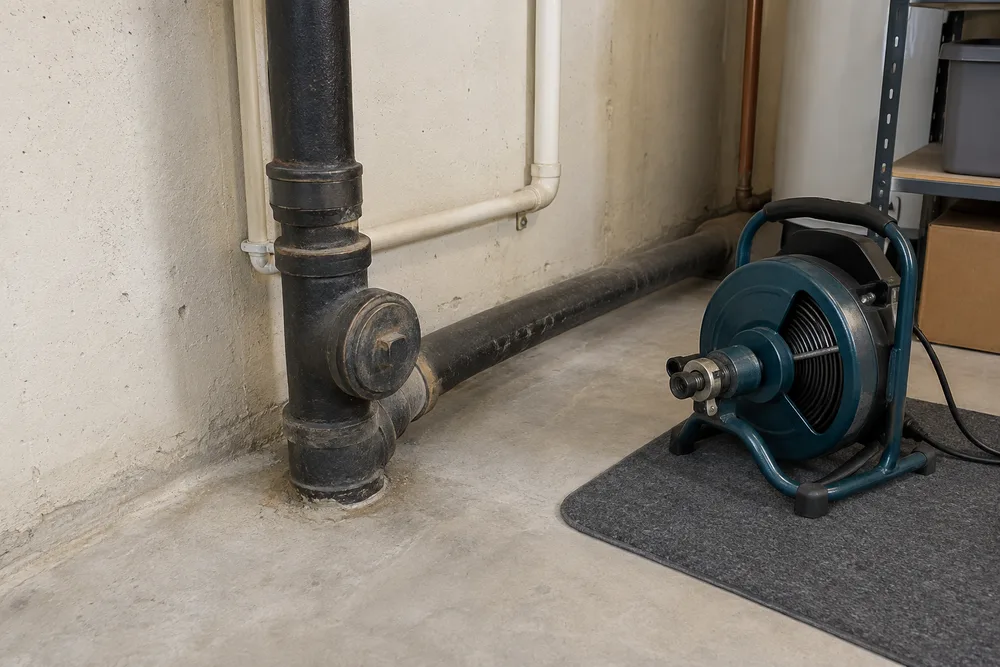
Sewer rodding uses a mechanical cable to break through or pull apart a blockage so wastewater can move again. It is a direct clearing method, especially when a line is obstructed by soft buildup, paper, debris, or some root intrusion.
Rodding can restore flow without replacing the pipe. That said, it does not repair broken sections, offset joints, or collapse. If the line clears but symptoms return, the blockage may not be the whole story.
That is why the conversation after the first clearing matters. A contractor may suggest a sewer camera inspection when the pattern sounds recurring, when the line cleared only partly, or when you want more information before the next step.
If your concern is mostly about fixture drains, not the main line, a drain cleaning visit may fit better. The practical question is not just what is clogged, but where the shared line starts and ends.
- Good fit: main-line blockage, repeated backup, several slow drains.
- Limited fit: a single sink trap, tub hair clog, or isolated toilet stoppage.
- Next step after clearing: observe whether flow stays normal or returns to the same bad pattern.
How the work usually starts
The contractor will usually ask what you saw, find the access point, and check whether the blockage is reachable from that opening. In some homes, a cleanout is available and makes the job more direct. In others, access has to be handled from a different point in the line.
Water backing up now?
Pause water use and call. Emergency calls are accepted 24/7.
Access, safety, and what to avoid before the visit
If wastewater is already backing up, the safest move is to stop using sinks, tubs, toilets, laundry, and other fixtures that add more water to the system. Running water just to see it happen again can spread the mess and make the clearing harder.
Do not open a pressurized or backed-up cleanout on your own. If you know where the cleanout is, leave it alone until the contractor can assess it. If you are not sure whether the cap is under pressure, treat it as something for the pro to handle.
If you want to prepare the area, clear space around the access point, make sure the contractor can reach the basement or yard area involved, and keep pets and children away from the work zone. You can also review sewer cleanout access if you want a simple homeowner checklist without turning it into a repair project.
The useful conversation is usually about where the symptoms show up, whether the backup is active, and whether there is any past history of recurring clogs. That is enough to guide the first pass without guessing at the pipe from the curb or from the street.
- Pause water use if wastewater is returning anywhere in the house.
- Leave closed or pressurized cleanouts alone.
- Clear space around the likely access area.
- Share prior clog history, especially if the same line has failed before.
A brief note on public versus private responsibility
Lake County’s sewer service-area information helps point residents toward the public system, but it does not diagnose private piping. If the problem is inside the home or on the private line, rodding is a building-side service. If the issue appears to involve the public side, the contractor may tell you what to verify next with the proper utility contact.
What happens during a sewer rodding visit
The goal is straightforward: clear the blockage, confirm that flow returns, and decide whether the line needs more than mechanical clearing. The contractor will normally talk through the symptom pattern first, then work from the best access point, then test the line by running water or watching how the drain behaves after the blockage is removed.
Expect a short diagnostic conversation before the tool comes out. That conversation is not wasted time. It helps the contractor avoid treating a fixture symptom like a main line problem, or the other way around.
If the line clears cleanly and the drains stay normal, that may be the end of the visit. If the blockage feels hard, keeps returning, or points to roots or pipe damage, the next useful conversation is often about inspection or another method such as jetting. You can compare those options through rodding, snaking, and jetting without assuming one method fits every pipe.
If you started with a general backup concern and want to see how symptoms are sorted before the visit, sewer backup symptoms explains the practical differences without turning every slowdown into an emergency.
- First comes symptom review, then access, then clearing, then a check of flow.
- Clearer flow after rodding is a good sign, but it does not prove the pipe is in perfect condition.
- Recurring blockage is a reason to ask about further inspection.
When inspection becomes useful
Inspection becomes more useful when the same line has clogged repeatedly, when the blockage feels unusual, or when you want to know whether buildup, roots, or a damaged section are showing up inside the pipe. The camera does not replace clearing, but it can add the missing context after the obstruction is removed.
How to decide what the next step should be
The next question is usually whether the problem looks like a one-time blockage or part of a pattern. If the line cleared and has stayed normal, you may not need anything else right away. If the same drains start reacting again soon, the line may need a closer look, especially if the clog came back after a previous cleaning.
Recurring backups deserve more information, not just another guess. A camera inspection can help show buildup, roots, offset joints, or a narrowed section that mechanical clearing did not solve.
If the blockage seems to be limited to one fixture, use the fixture-specific service instead of the main line page. If several drains are affected, the main sewer is more likely involved. That distinction keeps you from paying for the wrong kind of visit.
For ongoing care after the issue is cleared, it helps to think in terms of usage and condition, not calendar habit alone. A home with heavy kitchen use, older piping, or a line that has clogged before may need a different maintenance plan than a line that has never given trouble.
- One-time blockage that stays gone may need no further work.
- Repeat clogging points toward inspection or a more targeted plan.
- Different symptoms call for different services, not a universal approach.
- Maintenance should match the line’s condition and usage.
A simple decision frame
Ask three things: did more than one drain act up, did wastewater back up, and has this happened before? If the answer is yes to more than one of those, the main sewer line deserves attention. If the answer is no and only one fixture is slow, a fixture drain is the more likely place to start.
Local context for Vernon Hills homeowners
Vernon Hills sits within Lake County’s sanitary sewer service area, so public sewer questions may involve a county or municipal utility contact depending on the exact address and system involved. That is useful background, but it does not tell you whether your private line is clear, partially blocked, or damaged.
If you need help getting the request moving, you can use the referral process to see how the inquiry is routed, or go straight to contact for the current submission method. The key point is that the contractor who accepts the job will handle the work and set the practical next steps on site.
A good sewer-rodding call starts with symptoms, not assumptions. If you can describe what was happening, where it was happening, and whether water was still moving at all, the contractor can make the first visit more useful.
- Lake County maps help with service-area awareness.
- Private drain condition still has to be checked on site.
- Clear symptom details make the first visit more productive.
If you are choosing between services
If the issue is clearly a shared-line blockage, sewer rodding is the usual starting point. If you are dealing with a specific tub, toilet, or kitchen fixture, the fixture-specific service is a better fit. If the line keeps failing after clearing, a camera inspection is often the best way to gather the missing information.
Quick symptom-to-service comparison
| What you noticed | What it often suggests | Service to ask about |
|---|---|---|
| One slow sink or tub | Local fixture drain issue | Drain cleaning |
| Multiple drains reacting at once | Shared line or main sewer problem | Sewer rodding |
| Backup returns after clearing | Possible recurring obstruction or pipe issue | Camera inspection |
| Wastewater backing up anywhere | Active sewer problem | Emergency sewer help |
Questions homeowners ask
Is sewer rodding the same as snaking?
People often use the terms interchangeably. In practice, both refer to mechanical clearing of a blockage, usually with a cable-type tool. The important question is whether the blockage is in a fixture drain or the main sewer line.
What if only one toilet seems slow but the rest of the house is fine?
That often points to a local issue, but not always. If the toilet is slow and other low fixtures also change when it is used, the main line deserves a closer look.
Should I keep using water to test the problem before service?
No. If wastewater is backing up, stop running fixtures. Testing it over and over can worsen the overflow and make cleanup harder.
What if rodding clears the line but the backup comes back later?
That usually means the clearing worked for the moment, but something in the line still needs attention. A camera inspection is often the next useful step because it can show buildup, roots, or damage that rodding cannot see.
Do I need to know whether the sewer issue is public or private before I call?
No. If you are seeing a backup inside the home, call based on the symptoms. Lake County service-area information can help with public-system questions, but the contractor can sort out the private-line work on site.
Local resources
Use these official resources for municipal or utility information. They are separate from Plumbers 911.